Topic
Road Upgrade Options
Why Are Some Roads In My Road Service Area Not Maintained?
Understanding Mat-Su Borough Road Maintenance
Road Service Areas
The Mat-Su Borough does not have areawide administrative road powers. Instead, road maintenance is provided via a patchwork of Road Service Areas (RSA). Each RSA has a legal boundary defined in MSB code, and a mill rate is established for each RSA to be assessed to the properties within those boundaries. The taxes collected in each RSA fund the construction and maintenance of roads, streets, sidewalks and related drainage facilities.
The Mat-Su Borough has 16 total Road Service Areas (RSA). Each RSA has a legal defined boundary establishing its own mill rate, which funds the following:
"Services provided within this service area include the construction, reconstruction and maintenance of roads, streets, sidewalks and related drainage facilities."
Road Maintenance
Current Maintenance Adoption Policy
Under current policy, newly developed roads must be built in compliance with the Mat-Su Borough Subdivision Construction Manual in order to be considered for Borough maintenance. Roads are reviewed by the Mat-Su Borough Pre-Design & Engineering Dept, and if approved, are accepted for maintenance performed by the designated Borough Road Service Area contractor.
Existing roads accepted for maintenance are also expected to comply with the Subdivision Construction Manual, and contractors are expected to notify the Borough if any road is falling out of compliance.
View Interactive Map of Uncertified Roads
Historical Maintenance Adoption Practice
Historical Maintenance Adoption Practice In 1969, the State of Alaska introduced the State Revenue Sharing Program which contributed $1,000/mi to Mat-Su Borough road maintenance. This amount was increased to $2,500/mi in 1987, just as the population growth incline the Mat-Su Borough is still experiencing took off. Miles of new roads were constructed in the 1990s, though many of these roads were not built according to the Borough's maintenance standards . Even so, Borough leadership at the time chose to accept miles of 'unapproved construction' for maintenance in order to receive the State Revenue Sharing Program funds which could be used to assist homeowners with snow removal. This funding option was repealed in 2008, however, and is no longer available - all road maintenance is currently paid for out of Borough property owners' RSA taxes.
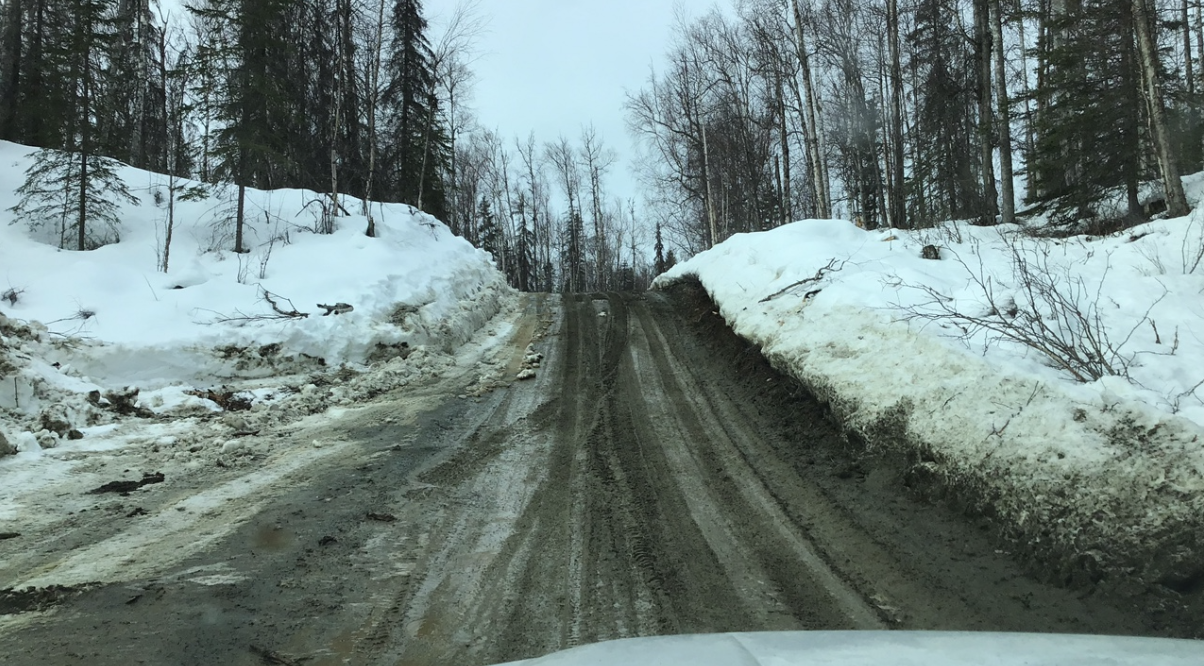
The results of the decision to adopt these sub-standard roads without long-term funding support are that they remain under Borough maintenance, but suffer compounding issues that have not been addressed (i.e. insufficient drainage, lack of cleared right-of-way, narrow width, sub-par embankment material, etc). Maintenance duties for these roads can be difficult to execute according to contract because of their conditions, and may result in further road damage over time.
Sub-Standard Roads
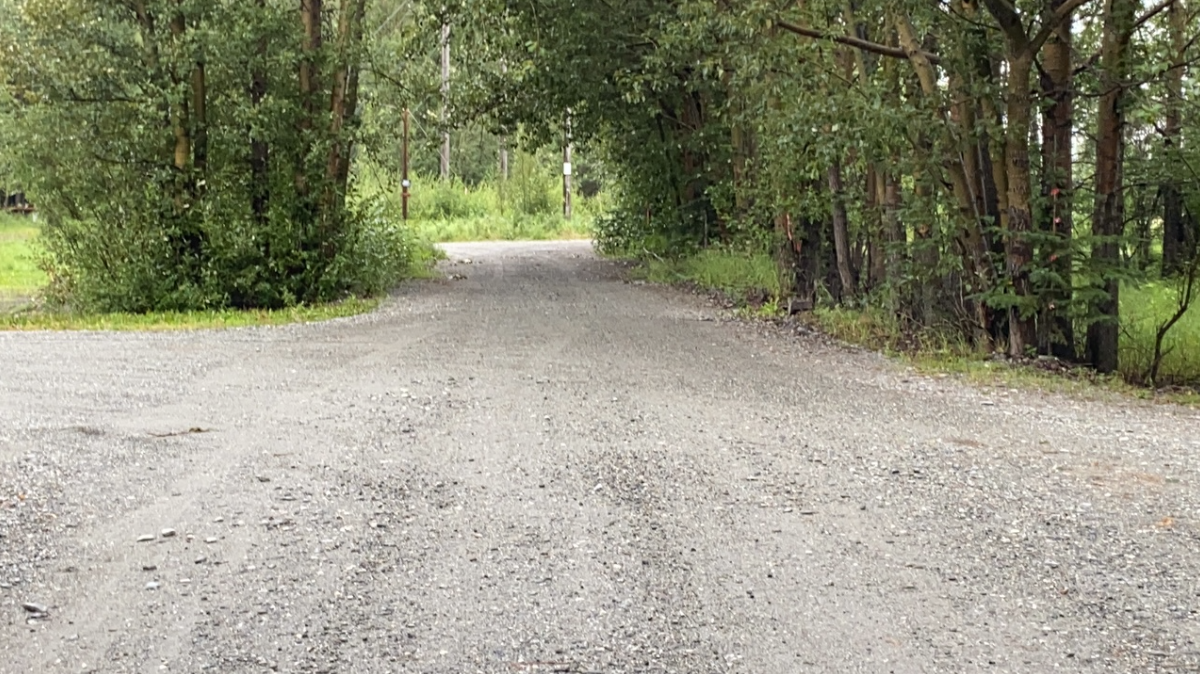
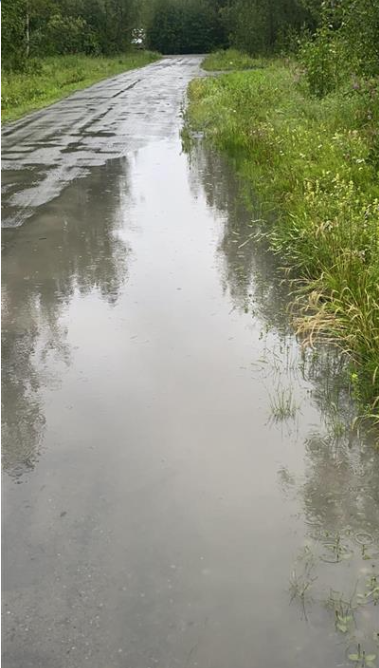
See examples of sub-standard roads - insufficient drainage, damage caused by poor construction, trees in the right-of-way, and insufficient width.
How To Get a Road Improved for Maintenance Approval
There are currently 4 ways to work with the Borough to get a sub-standard road improved for maintenance approval
-
If a citizen lives on a road that serves only their property, nothing prohibits them from funding and overseeing the improvement of the road themselves. Note, however, that acceptance for maintenance requires that the road be in a public right-of-way, not private land.
-
A group of neighbors on a shared road may create a Local Improvement District (LID) to request improvements to be made by the Borough. The cost of the improvements would then be distributed amongst the applicants over a period of approximately 10 years through an addition to their property taxes.
Citizens/neighbors on a shared street may contact the Mat-Su Borough Finance department to identify and define the boundary of their proposed Local Improvement District (LID), and to receive a LID kit.
The LID kit will include:
-
a printout which lists the name and address of each property owner within the proposed LID
-
the assessed value of each property
-
petition forms
-
a map showing the boundaries of the proposed LID
Once the petition signatures are complete the approval process will begin.
-
-
Citizens may work with their local Road Service Area Board to add sub-standard roads to the annual Road Improvement Project (RIP) list. These lists are presented by the RSA Boards to the Borough Assembly for approval. Roads approved for improvement are paid for out of the RSAs available project funds. See the steps for this process listed below.
-
Finally, an Assembly person may nominate a roadway to be considered for maintenance. Public Works would evaluate the nominated road and submit it to the associated RSA Board for consideration. Public Works would then prepare a resolution for Assembly review.
- An Assembly person nominates (via Manager or Public Works Director) named uncertified road(s) to be considered for maintenance.
- Public Works evaluates the specified road(s) to verify existing conditions and determines its readiness for maintenance.
- Public Works submits road name(s) to the relevant Road Service Area Board of Supervisors for consideration.
- Public Works prepares a resolution for Assembly consideration, then responds according to Assembly action taken.
- Project is added to the Road Improvement Project (RIP) list.
Services
Local Improvement District (LID)
The Borough can form Local Improvement Districts (LIDs) to fund essential upgrades. LIDs may be proposed by property owners or our assembly, allowing costs to be shared by properties benefiting from the improvements.
Private Road Improvements
The process for a homeowner to coordinate with the Mat-Su Borough Public Works Department (PWD) to get their road approved for maintenance.