Topic
Road Improvement Project (RIP)
Citizens may work with their local Road Service Area Board to add sub-standard roads to the annual Road Improvement Program (RIP) list. These lists are presented by the RSA Boards to the Borough Assembly for approval. Roads approved for improvement are paid for out of the RSAs available project funds.
RSA boards and MSB staff prioritize projects for each RSA and organize them into an annual Road Improvement Project (RIP) list.
Most RIP projects are focused on residential roads although, from time to time, minor collector or collector roads may be involved.
RSA RIP List Public Meetings
In the third quarter of each year, each RSA board holds a public meeting to discuss and recommend their respective RIP list. The RIP list is used to prioritize projects for the next five years in each RSA. Members of the public are encourage to attend these meetings and participate in project nomination discussions.
Each board passes a resolution of support for its RIP list.
The RIP lists for all Road Service Areas are organized and presented to the MSB Assembly for approval.
Assembly Review
The collective RIP list is discussed, amended, and/or approved at an Assembly meeting.
MSB Staff Receives the Approved List
Staff utilize the approved list to develop project cost estimates that improve the roads identified within each RSA.
Annual Budgeting Process
As part of the overall Borough budget the Assembly approves the funding for each RSA.
Staff prepares 5 year capital plan based on the RIP list, data collection, and maintenance priorities
Public Works prepares the proposed annual capital projects for each RSA.
The MSB Assembly reviews and approves the borough-wide budget at which point funding is provided for the approved projects.
Survey and Design
Road projects start with a survey and design. Utility relocations are critical to ensure all utilities are out of the way of the improvements. The Design Construction Manual (DCM) is used as a guideline for design and improvements.
Right of Way Review
If there are right-of-way constraints, the project team works with property owners to obtain easements that allow the project to be constructed to MSB standards.
Construction
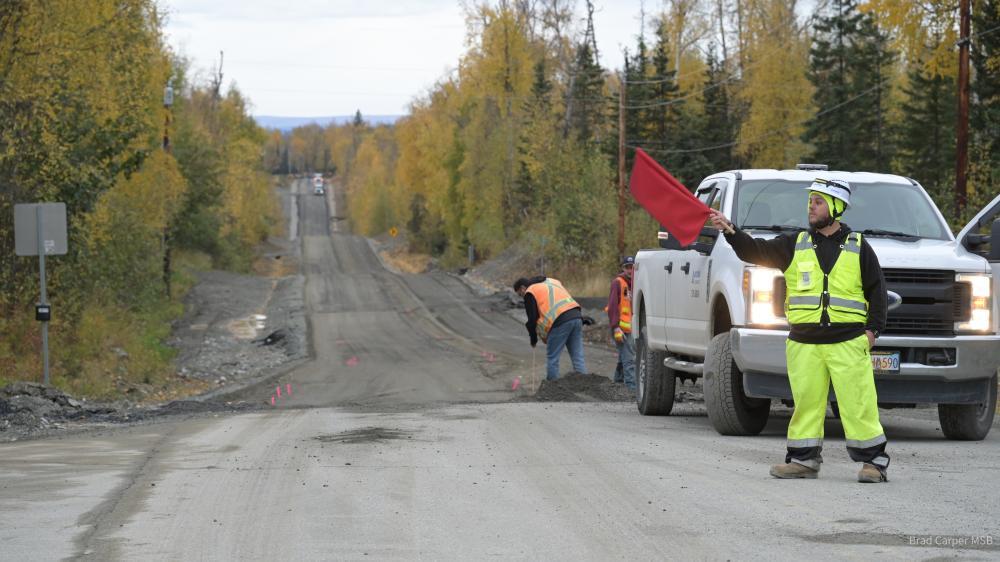
Once the design is completed and the utilities are relocated, the project is constructed.
Services
Boards
Meadow Lakes No. 27
Road Service Area (RSA) Board - Services provided within this service area include the construction, reconstruction and maintenance of roads, streets, sidewalks and related drainage facilities.
Greater Butte No. 26
Road Service Area (RSA) Board - Services provided within this service area include the construction, reconstruction and maintenance of roads, streets, sidewalks and related drainage facilities.
Caswell Lakes No. 15
Road Service Area (RSA) Board - Services provided within this service area include the construction, reconstruction and maintenance of roads, streets, sidewalks and related drainage facilities.
Greater Talkeetna No. 29
Road Service Area (RSA) Board - Services provided within this service area include the construction, reconstruction and maintenance of roads, streets, sidewalks and related drainage facilities.
Alpine No. 31
Road Service Area (RSA) Board - Services provided within this service area include the construction, reconstruction and maintenance of roads, streets, sidewalks and related drainage facilities.
Trapper Creek No. 30
Road Service Area (RSA) Board - Services provided within this service area include the construction, reconstruction and maintenance of roads, streets, sidewalks and related drainage facilities.
Gold Trail No. 28
Road Service Area (RSA) Board - Services provided within this service area include the construction, reconstruction and maintenance of roads, streets, sidewalks and related drainage facilities.
Greater Willow No. 20
Road Service Area (RSA) Board - Services provided within this service area include the construction, reconstruction and maintenance of roads, streets, sidewalks and related drainage facilities.
Lazy Mountain No. 19
Road Service Area (RSA) Board - Services provided within this service area include the construction, reconstruction and maintenance of roads, streets, sidewalks and related drainage facilities.
North Colony No. 23
Road Service Area (RSA) Board - Services provided within this service area include the construction, reconstruction and maintenance of roads, streets, sidewalks and related drainage facilities.
South Colony No. 16
Road Service Area (RSA) Board - Services provided within this service area include the construction, reconstruction and maintenance of roads, streets, sidewalks and related drainage facilities.
Big Lake No. 21
Road Service Area (RSA) Board - Services provided within this service area include the construction, reconstruction and maintenance of roads, streets, sidewalks and related drainage facilities.
Knik No. 17
Road Service Area (RSA) Board - Services provided within this service area include the construction, reconstruction and maintenance of roads, streets, sidewalks and related drainage facilities.
Midway No. 9
Road Service Area (RSA) Board - Services provided within this service area include the construction, reconstruction and maintenance of roads, streets, sidewalks and related drainage facilities.
Fairview No. 14
Road Service Area (RSA) Board - Services provided within this service area include the construction, reconstruction and maintenance of roads, streets, sidewalks and related drainage facilities.
Bogard No. 25
Road Service Area (RSA) Board - Services provided within this service area include the construction, reconstruction and maintenance of roads, streets, sidewalks and related drainage facilities.