
Topic
Snow Load Calculation
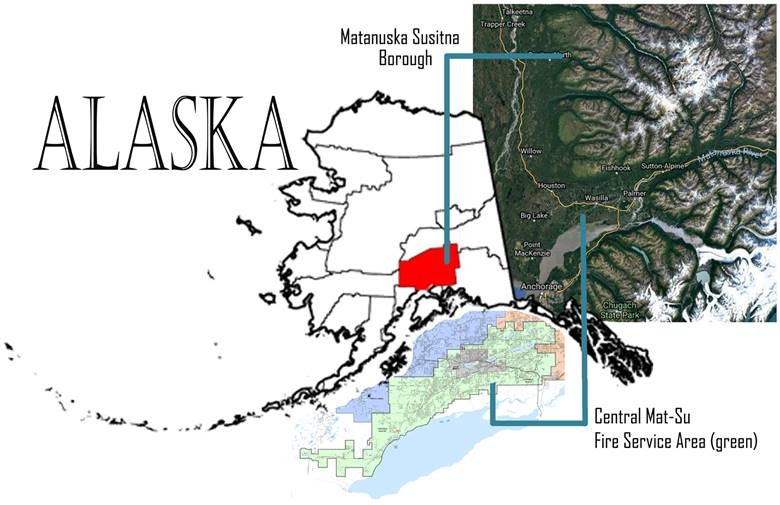
Snow loads vary across Alaska, from as much as 300 pounds per square foot (psf) in Whittier to as little as 25 psf in northern Alaska. There are several factors used to calculate snow loads, including the moisture content of the snow, seasonal accumulation, and drifting. Central Mat-Su Fire Service Area encompasses 160 square miles within the core area of the Matanuska Susitna Borough (25,258 square miles). Borders include an arm of the Pacific Ocean to the Southwest and two mountain ranges. The ground is usually snow covered from November through March except where the fields are blown bare by the cold gusty northeasterly winds.
When calculating wind load or snow load, an engineer, licensed in the state of Alaska, is required to complete the calculations. The 2021 International Building Code supplies the variables to complete the calculations. There are several different sets of variables to calculate those loads, the charts in Chapter 16 (Sections 1608 and 1609) only represent a few key areas within the Borough. To determine loads not mentioned in the charts, one suggested way is to locate the geographically closest area. We suggest you add a safety margin of 10 to 20% and use that number to complete the calculation.
Services
Departments & Divisions
Central Mat-Su Fire Department
The service area includes the City of Wasilla and extends from the Parks and Glenn Highway intersection west to Vine Road, north to Mile 7 of Wasilla-Fishhook Road, and south to Mile 6 of Point MacKenzie Road.
Fire and Life Safety Division
We conduct all fire and life safety plan reviews and inspections, as well as, fire prevention and education activities for the Central Mat-Su Fire Service Area (FSA).